Oct 6, 2026Tea Industry Insights
Black Tea Powder for Beverage Manufacturing: Grade Selection Guide
Eleven black tea powder grades for beverage manufacturing: Ceylon picks, fannings and blends, matched to application.
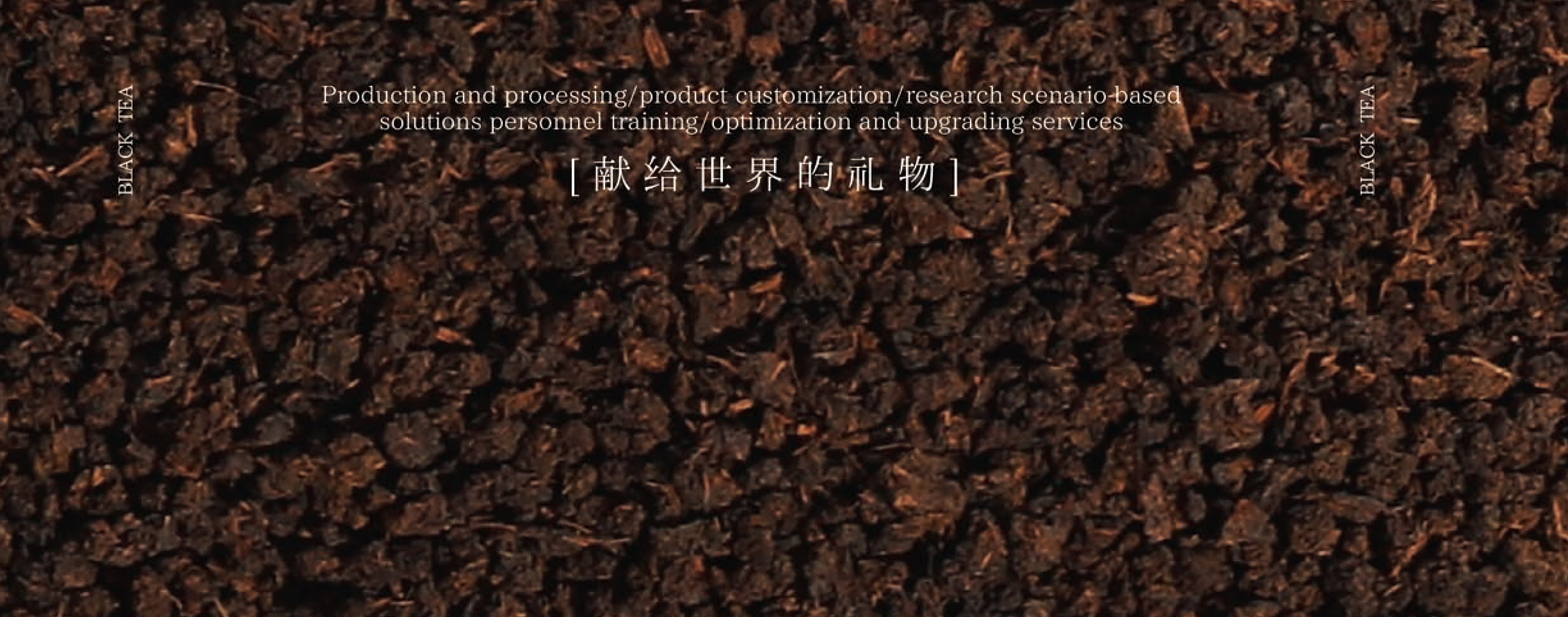
Black tea powder is the workhorse ingredient behind milk tea, sparkling fruit drinks, bakery fillings and a growing list of ready-to-drink formats. It is also where cost, flavor and consistency are quietly decided, because the grade you choose determines extraction speed, body and how the ingredient behaves in your application. Our catalog lists 11 black tea powder grades, and this guide explains how they are organized and how to choose among them.
Why Grade Selection Is a Manufacturing Decision
In the tea trade, terms such as fannings, broken and coarse describe leaf particle size, and particle size drives extraction: smaller particles give up color and strength faster, larger ones build a cleaner, slower cup. Powder formats compress that logic into an ingredient that disperses directly into your process, which is why beverage factories favor them for high-volume, spec-driven production.
The practical consequence: a grade is a tool, not a ranking. A grade optimized for a strong milk tea base will taste thin in a sparkling fruit application, and a delicate fruit-tea grade can disappear under dairy. Match the grade to the application first, then negotiate volume.
The 11 Grades in Our Black Tea Powder Series
The series is organized so buyers can navigate by origin, particle style and blend personality. Origin flags come first because origins differ in extraction behavior and dairy tolerance; particle styles come second because they set the speed and clarity of your process; blend personalities come last because they are the flavor decision your customers actually taste.
The Blue Diamond Ceylon flagship
SMAARK Blue Diamond Ceylon carries the Ceylon identity our Guangzhou plant, which focuses on imported black teas, was built around. Beside it, Ceylon floral and Ceylon mellow offer the same origin in two character directions, floral-forward versus soft and rounded, so an origin story can hold across a whole range rather than a single item.
Premium particle grades
Premium Fannings, Premium Broken and Premium coarse grade cover the classic particle range. Buyers choose among them for extraction speed and cup clarity, matching the grade to the brew system in their factory or store. Fast-extracting grades suit high-turnover beverage lines; slower, cleaner cups suit applications where delicacy survives to the glass.
Blend personalities: light, strong, floral, mellow
The remaining grades announce their direction in the name: Blue Diamond light blend and Blue Diamond strong blend for body, Champion floral blend and Champion strong blend for aroma intensity with strength, and Select Mellow No.1 for a soft, rounded finish. Specification sheets for every grade are available on request, and we can benchmark two or three candidates against your current base before you commit.
Matching Grades to Applications
Milk tea and dairy bases
Dairy is the hardest test for a tea base: it mutes delicate aromatics and demands body and strength that survive milk, creamer and sugar. This is where strong blends and broken-style grades typically earn their place, always validated at your own ratio before scale-up.
Fruit tea and sparkling builds
Fruit-forward drinks want clarity and a bright character that complements rather than fights the fruit. Our nine developed application recipes show the pairing logic, from pomelo and lemon with Yinhua Xiang to mango, passionfruit and mint with Bailan green, and the same logic applies when the base is a black tea powder. Lighter blends and floral directions are the usual starting points.
Bakery and other formats
Powder disperses where leaf cannot: doughs, creams, glazes and RTD bases. Flavor persistence through heat processing varies by grade, so we confirm the fit per application with samples rather than assumptions.
Capacity Behind the Powder
Supply stability matters as much as grade. The group sources more than 100 tea materials with a standing inventory above 1,000 tons across more than 10 tea bases, and the Guangzhou plant, operating since 2017 on 6 lines, delivers 3,000 tons per year focused on imported black teas. Quality is held by an ISO 22000:2018 food safety management system certified by CQC, with color sorting at about 1,000 kg per hour, foreign-object detection down to 0.1 mm, and a 1,000-ton constant temperature and humidity warehouse.
Request Samples and Spec Sheets
Send your application, target flavor direction and volumes through the contact form on our website or on WhatsApp at +86 130 7163 2772. Our export team replies to every inquiry with grade recommendations, samples and spec sheets for your shortlist.
Sources and Verification
ISO 22000:2018 food safety management certificate no. 001FSMS2400758, issued by CQC (China Quality Certification Centre), valid to October 2027; scope covers flavored tea production and tea/herbal tea packaging. Copy shared during inquiry; issuance verifiable through CQC.
US FDA food facility registration no. 10319209992 (DUNS 450984434), valid to December 31, 2026. Facility registration is required by the Bioterrorism Act of 2002; the registry and program details are published by the FDA at fda.gov and access.fda.gov. Registration is not product approval.
Halal certification issued by Shandong Halal Certification Service (SHC) against GSO 2055-1:2015, the Gulf standard for halal products; cross-checkable through ehalal.cn.
The 11 black tea powder grades and their positioning follow our published catalog; Guangzhou plant figures (3,000 tonnes/year, six lines, imported black tea focus) are company factory records.
Note: Catalog, capacity and OEM terms (including MOQ and schedules confirmed per project) come from our published catalog and factory documentation, shared as copies during inquiry. No third-party client names or pricing are disclosed on this site.