Oct 6, 2026Certifications & Compliance
FDA Facility Registration for Tea Exports: What US Buyers Should Verify
What FDA facility registration means for imported tea, what it does not mean, and how US buyers verify a supplier.
Tea imports into the United States live or die on paperwork as much as flavor, and few documents get misread as often as FDA facility registration. Some suppliers imply it is a product approval. Some buyers assume it guarantees admissibility. Neither is true, and precision here protects both sides of the transaction. This guide explains what FDA facility registration actually certifies, what an importer remains responsible for, and how to verify a registration before you commit to a supplier.
What FDA Facility Registration Is, and Is Not
Under US food law, a foreign facility that produces food for American consumption must be registered with the FDA before its products are offered for import. Registration is a notification: it tells the FDA who the facility is, where it is and what it does. It is not an inspection certificate, it is not a product approval, and it does not certify that any individual shipment is compliant. Any buyer who hears a supplier describe it as FDA approval is hearing a red flag, not a credential.
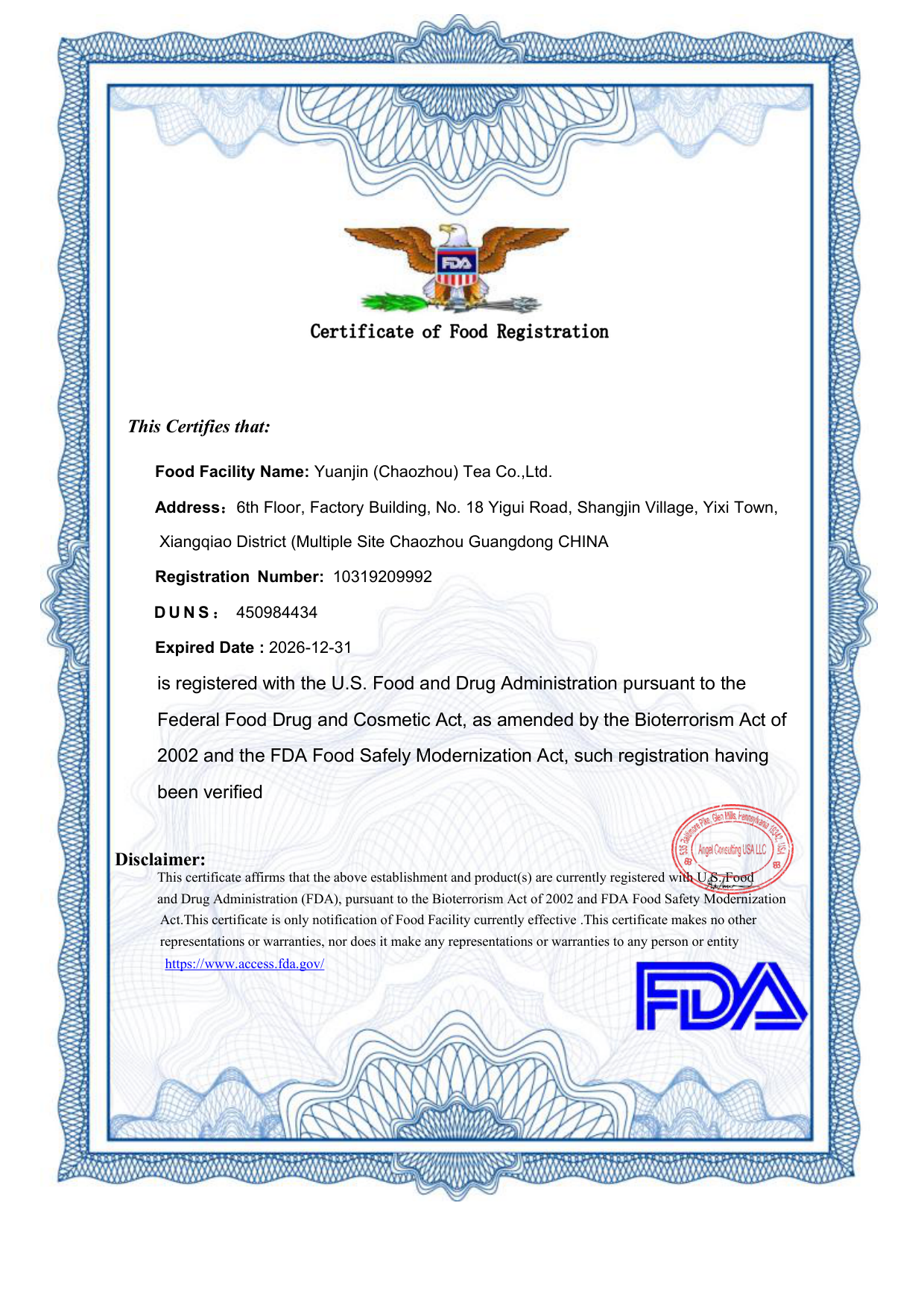
Our own registration is stated the same careful way. Yuanjin operates as an FDA-registered food facility, registration no. 10319209992, DUNS 450984434, valid through 31 December 2026. When we say FDA facility registered, that is exactly what it means: the facility is registered with the US FDA, no more and no less.
Why the Registration Still Matters for Your Import File
None of this makes registration a formality. Products from an unregistered facility are subject to refusal at entry, so verifying registration is the first checkbox in any US import file. Your customs broker will ask for it, your retail partners' compliance teams will ask for it, and the FDA's Foreign Supplier Verification Program rules place the legal duty on you, the US importer, to verify that your foreign supplier produces food meeting US safety standards. A registered facility with a documented food safety system is exactly the supplier profile that verification is designed to find.
Treat registration as the entry ticket, not the whole audit. It qualifies a facility to enter the import process; the system behind it is what clears the process. That distinction is what separates a compliant sourcing file from a folder of papers.
The Food Safety System Behind Our Registration
The factory operates an ISO 22000:2018 food safety management system, HACCP-based, issued by CQC under certificate 001FSMS2400758. Certification has been in place since 11 October 2024 and runs until 10 October 2027, with a scope covering the production of flavored tea and the packaging of tea and herbal tea products. HACCP system certification is held alongside it, and the factory holds China export food producer registration.
On the line, the same system is visible in hardware: color sorting at about 1,000 kg per hour, electrostatic impurity removal, magnetic metal removal, foreign-object detection down to 0.1 mm, and a 1,000-ton constant temperature and humidity warehouse. These are the controls your verification file wants to reference, and they are documented, not decorative.
How to Verify a Supplier's FDA Registration
Verification is straightforward when you know what to ask for. Request the registration confirmation showing the registration number and DUNS number, and check that the two match across documents. Confirm the registration is current; registrations run on a two-year renewal cycle, so a lapsed document is a real possibility with careless suppliers. Have your customs broker confirm the registration clears FDA screening when entries are filed, and keep the confirmation in your verification records. Finally, ask whether the registered activity belongs to the facility that actually manufactures your tea, because a registration belonging to a different company does not travel with the product.
One habit worth copying from experienced importers: file the FDA document together with the ISO 22000 certificate and export registration in a single supplier file, and re-check every validity date at each contract renewal. Compliance documents age, and an expired certificate discovered at the port costs far more than a calendar reminder.
Request Our Documentation Directly
We provide document copies on request: the FDA facility registration confirmation, the CQC-issued ISO 22000 certificate and China export food producer registration, together with profile sheets for the teas you are sourcing. Send your destination market and target categories through the contact form on our website or on WhatsApp at +86 130 7163 2772. Our export team replies to every inquiry.
Sources and Verification
Registration requirement and program: Bioterrorism Act of 2002 and FDA guidance, published at fda.gov/food/registration-food-facilities-and-other-submissions/online-registration-food-facilities; registry portal at access.fda.gov.
Our registration: US FDA food facility registration no. 10319209992 (DUNS 450984434), valid to December 31, 2026.
ISO 22000:2018 certificate no. 001FSMS2400758, issued by CQC, valid to October 2027 (flavored tea production; tea/herbal tea packaging).
FSVP context: the Foreign Supplier Verification Programs rule (21 CFR Part 1, Subpart L) places import-verification duties on the US importer of record.
Note: Catalog, capacity and OEM terms (including MOQ and schedules confirmed per project) come from our published catalog and factory documentation, shared as copies during inquiry. No third-party client names or pricing are disclosed on this site.