Oct 6, 2026Sourcing Guides
Sourcing Jasmine and Scented Teas from China
A selection framework for jasmine and scented teas, from base tea and scenting approach to catalog picks and samples.
Jasmine sourcing goes wrong when buyers treat jasmine as one product instead of a family: jasmine-scented greens on different bases, other scented greens, and scented oolongs, each with its own aroma strength and best use. Our catalog carries a nine-item green tea series led by jasmine scents and a nine-item scented tea series. This guide gives you a selection framework - base first, application second, scenting third - and how to get the full list with samples.
Start With the Base, Not the Flower
In a jasmine tea, the base leaf decides body, bitterness and how the scent ages, while the scenting decides the aroma top-note. Names usually encode the base: Jasmine Maojian points to a maojian green, while Jasmine Xiangpian and Jasmine Xiangjian signal different leaf and cut styles. Ask what the base is before comparing prices, because two jasmine teas on different bases are not substitutes.
Our green tea series lists nine items, most of them jasmine-scented: Seven-infusion Jasmine, Chuan Piaoxue, Jinhao Jasmine, Jasmine Maojian, Jasmine Xiangjian, Jasmine Xiangpian, Emerald Jasmine green, Zhenwang Jasmine and Bailan (White Champa) green. Zhenwang Jasmine carries a full sensory profile in our catalog - dry leaf through liquor, aroma, taste and leaf bottom - available on request as a profile sheet.
Match the Scent Style to the Application
For hotel guest-room and tea-bag programs, jasmine green sits alongside Ceylon black and green in our standard room-amenity set, where a clean, familiar cup matters more than novelty. For beverage chains, a jasmine base needs enough scent strength to survive fruit, dairy or ice. For retail and gift lines, the scented tea series extends the shelf beyond jasmine: Osmanthus green, Qinxiang Jasmine green, Pomelo green, Yulan (magnolia) green, White Peach Oolong, Gardenia Maojian, Magnolia four-season, Camellia oolong and Jingui Tieguanyin.
How the Scenting Is Done - and Why It Matters
Scent consistency is where scented-tea programs usually fail across seasons. Our production uses proprietary aroma customization and lock-aroma technology to hold the scent profile batch to batch, and the certified scope of our ISO 22000:2018 food safety management system - certificate 001FSMS2400758, issued by CQC - covers the production of flavored tea and the packaging of tea and herbal tea products, the scope wording the certificate actually uses. That matters: check where your product sits inside that wording rather than assuming a certificate covers every format.
Extract Formats for Jasmine Programs
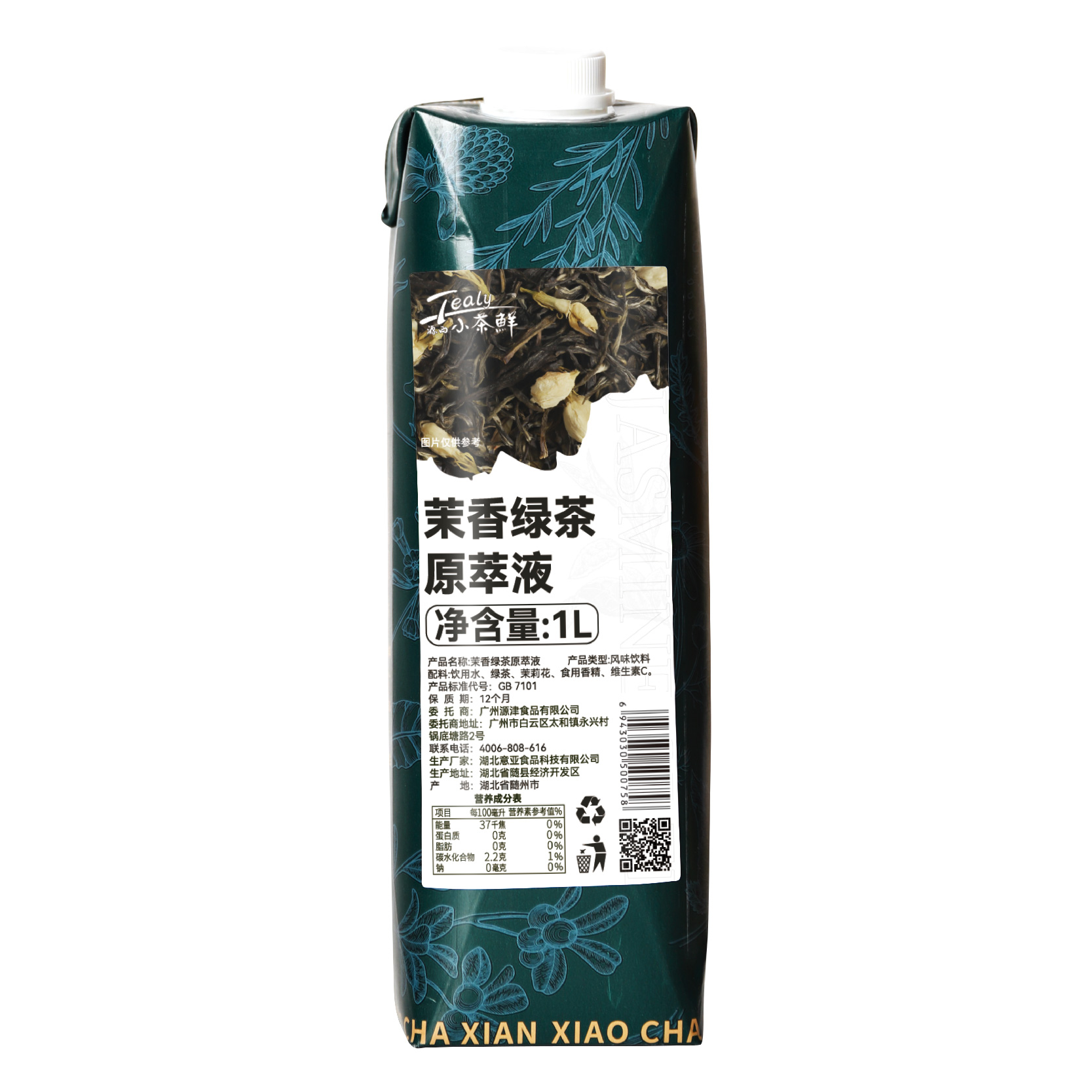
Where the application is a beverage chain or RTD line rather than leaf in a bag, the same jasmine direction is available in extract formats: Jasmine Green Tea Extract and Jasmine Maojian Extract. Extracts compress the scent-and-base decision into a soluble format with batch-to-batch consistency, which is usually the deciding factor at chain scale. Custom aroma direction is part of the scenting work, so a program that needs a specific jasmine intensity can be matched against a reference sample.
What to Check When You Compare Jasmine Samples
When samples arrive, brew them side by side at the same leaf-to-water ratio and temperature, and taste them twice: once hot, once over ice, because jasmine reads louder cold. Separate the top-note from the persistence - a strong first sniff that fades after one infusion is a different product from a scent that holds through several, and names such as Seven-infusion Jasmine signal the intended style. Compare each sample against its sensory profile sheet, and against your own application: the right jasmine for a tea bag is not always the right one for a fruit cup.
Request the Scented-Tea List and Samples
Send your application - tea bags, beverage base or retail - and target market through the contact form on our website or on WhatsApp at +86 130 7163 2772. Our export team replies to every inquiry with the scented-tea list, sensory profile sheets and sampling arrangements for your evaluation.
Sources and Verification
Product names and series counts are quoted from our published catalog: the green tea series (nine items) and the scented tea series (nine items). Sensory profiles for featured teas such as Zhenwang Jasmine are catalog documents available on request.
Scenting, aroma customization and lock-aroma claims are company statements from our group materials. ISO 22000:2018 certificate no. 001FSMS2400758 is issued by CQC, valid to 10 October 2027; its scope covers production of flavored tea and packaging of tea and herbal tea products. No third-party market data or statistics are cited in this article.