Oct 6, 2026Tea Industry Insights
Tea Extracts for Foodservice: Storage, Dosage and Menu Applications
Tea extracts for foodservice: storage and dosage basics, nine extracts, and menu applications from a nine-recipe set.
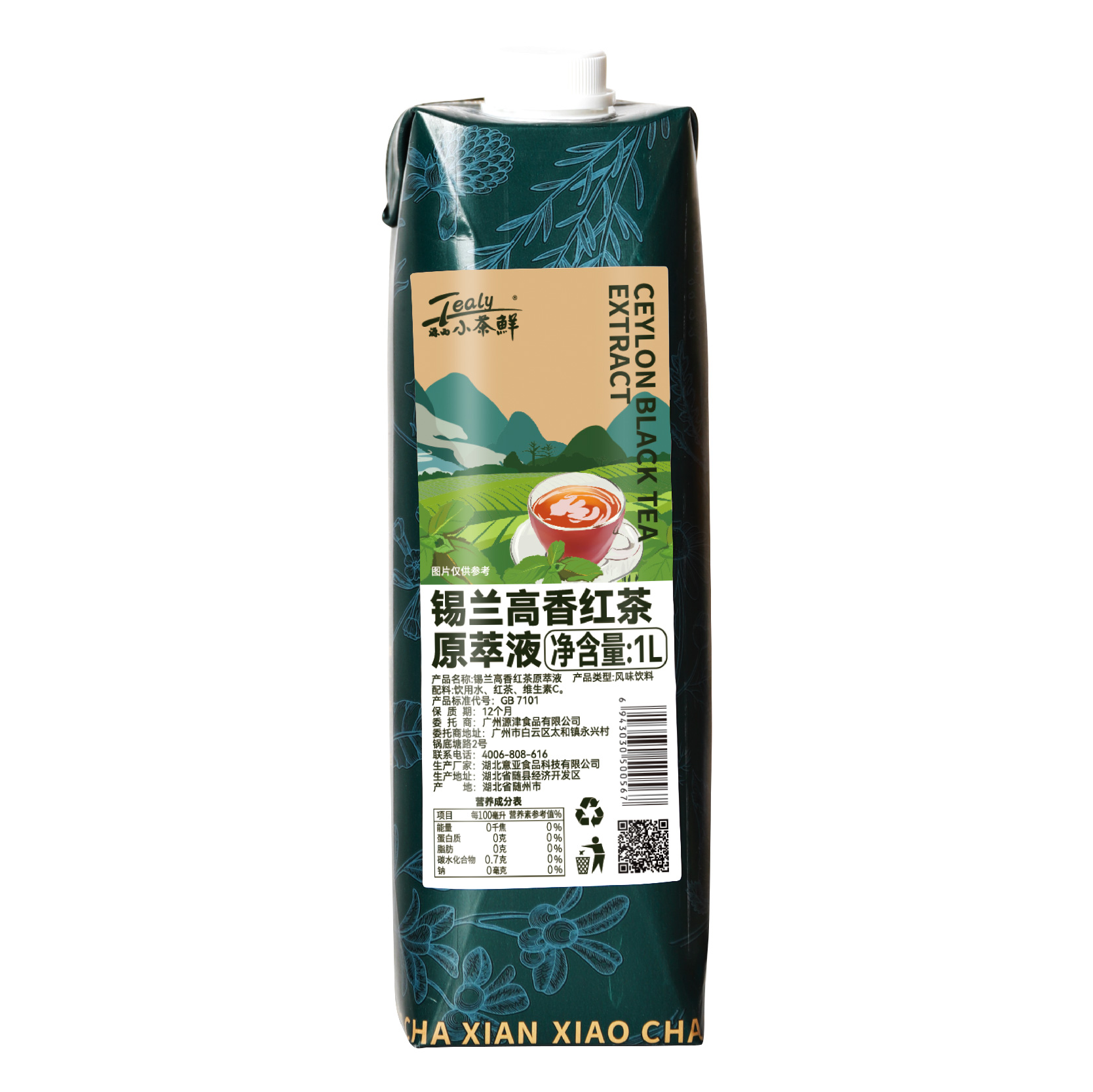
Liquid tea extracts let a foodservice outlet serve a consistent cup without a brewing station, and the operating basics come down to three habits: store cartons according to the pack spec sheet, dose by recipe card rather than instinct, and build the menu from pairings already proven in application recipes. Our extract line is brewed tea, UHT-treated and aseptically cold-filled into cartons with no preservatives, and the serve itself is a three-second job: open, pour, done.
Why Chains Move to Extracts
Brewed tea varies with water, staff and time; an extract does not. Every store pours from the same liquid base, so the drink your flagship location developed is the drink store number forty serves. There is no brewing equipment to buy, no training program to run and no batch variance to audit. Carton packing stacks into back-of-house storage, and service speed stays constant through the rush.
The Extract Line at a Glance
Nine extracts cover the classic chain menu: Ceylon Black Tea Extract, Jasmine Green Tea Extract, White Peach Oolong Extract, Dahongpao Oolong Extract, Gardenia Green Tea Extract, Osmanthus Oolong Extract, Jasmine Maojian Extract, Longjing Green Tea Extract and Dancong Oolong Extract. Each is brewed tea treated by UHT and aseptically cold-filled, with no preservatives in the pack.
Storage and Handling at the Store
Storage details for liquid extracts are pack-specific, so treat the spec sheet shared during inquiry as the operating document: it defines the storage conditions and handling window your stores follow. Two house rules hold regardless of brand. Assign a storage owner per store, so cartons are never parked next to heat sources, and rotate first in, first out, so the oldest carton pours first. Sealed until use, logged on delivery, counted at shift close: the same discipline you already apply to dairy applies here.
Dosage and Menu Builds
Dosage lives on the recipe card, and every extract ships with documented menu applications from our export sheets. Examples from the line: Gardenia Green Tea Extract with guava as a fruit tea build, White Peach Oolong Extract over cheese foam as a milk tea build, Longjing Green Tea Extract adapted for cafe menus, and paired osmanthus and dancong applications for seasonal specials. Across the group we have developed nine application recipes, from fruit-forward sparkling builds to dairy-topped serves, and each one maps to a base you can spec.
Scaling From One Store to a Chain
The logic that works for one cafe scales: fixed recipes, a consistent liquid base and documented applications. Behind the extract line sits the group's dual-factory operation, an ISO 22000:2018 certified food safety management system and sourcing of more than 100 tea materials, which is what keeps the flavor steady as your store count grows.
What to Confirm Before You List an Extract Drink
Before an extract drink goes on the menu, confirm four things with your supplier: the pack spec sheet, so storage and handling are written for your stores rather than guessed; the recipe card, so dosage is fixed and trainable; the sensory profile, so the drink matches its menu description; and the factory certificates behind the line, so procurement and QA sign off once instead of per store. We answer those four with the spec sheet, the application handbook, sensory descriptions shared during inquiry and an ISO 22000:2018 certified system, with equipment application support so the dosage translates onto your existing setup.
Request the Application Recipe Handbook
Tell us your store format and menu direction and request the application handbook through the contact form on our website or on WhatsApp at +86 130 7163 2772. Our export team replies to every inquiry with the recipe set, pack spec sheets and sample arrangements.
Sources and Verification
Extract line, UHT treatment, aseptic cold filling, no preservatives and carton packing follow our published tea extract documentation; the menu applications above are examples from our export application sheets, part of a set of nine developed recipes. Pack-specific storage conditions and parameters are provided on the spec sheet during inquiry.
ISO 22000:2018 certificate no. 001FSMS2400758, issued by CQC, valid to October 2027; scope: production of flavored tea, packaging of tea and herbal tea products. Sourcing and factory figures are company records. No third-party client names or pricing are disclosed.