Oct 6, 2026Tea Industry Insights
Tea Extract vs Loose Leaf: Which Format Fits Your Beverage Program
Tea extract or loose leaf? Compare speed, consistency, labor and brand fit to pick the right format for your menu.
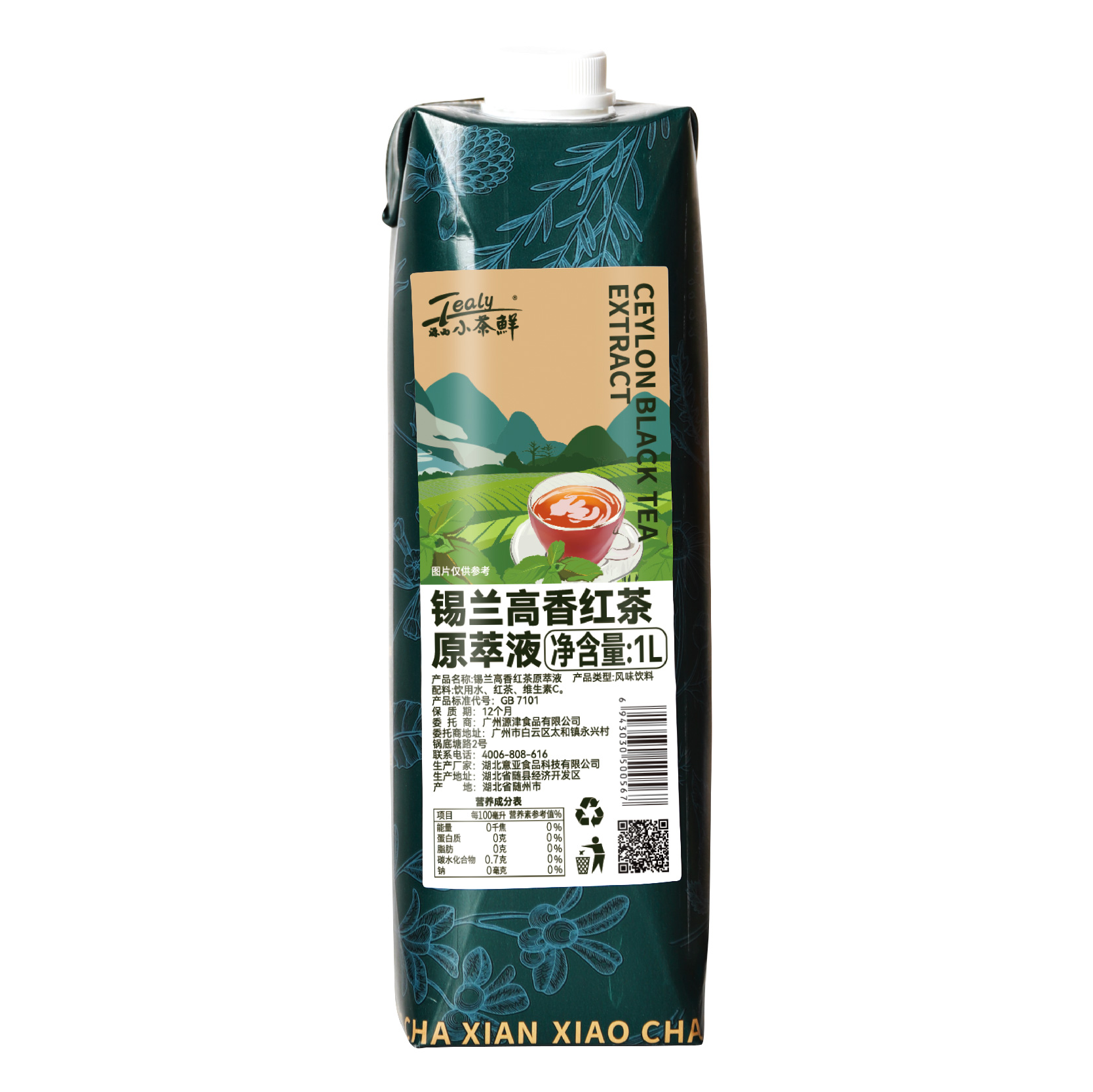
Every beverage program answers the same question a hundred times a day: how does tea get into the cup? The two industrial answers are loose leaf and tea extract, and the right choice is rarely about which format is better in the abstract. It is about your channel, your volume, your staff and the experience you are selling. Here is an honest comparison, and where each format fits.
What Tea Extract Changes About Operations
A tea extract is a concentrated liquid tea base prepared for dilution and service. Operationally it removes brewing from the store entirely: no kettles, no timers, no steep logs, no leaf disposal. A finished cup comes together in about three seconds, pour to serve, which changes queue dynamics at peak hours.
Consistency is the bigger gain. The extract arrives with strength, aroma and clarity fixed at the factory, so cup number four hundred tastes like cup number four. Stores waste less because staff dilute only what they pour, and new hires reach competent output on day one instead of after weeks of calibration.
The capability sits on serious infrastructure. Our group sources more than 100 tea materials with a standing inventory above 1,000 tons, and our proprietary aroma customization and lock-aroma technology is what keeps an extract's profile stable from one production run to the next.
Where Loose Leaf Still Wins
Loose leaf sells process. Leaves unfurling in glass, the aroma of an open brew, the ritual of a gaiwan or a siphon bar: these are experiences a liquid cannot replicate. For specialty cafes, tea houses and premium afternoon service, the leaf is the product, and the customer is paying partly for the theater.
Leaf also gives the operator hands-on control. Steep time, temperature and leaf-to-water ratio are dials a skilled barista can turn, which makes loose leaf the format of choice when a program wants a signature brew competitors cannot copy from a bottle. Our catalog spans 84 items across seven series, from black tea and green tea through oolong, Dancong and scented teas, with full sensory profiles available for the featured teas.
The trade-off is operational. Leaf needs equipment, trained staff, brew-time discipline and a tolerance for over-steeped batches. Programs that underestimate those demands are the ones that end up switching to extract.
An Extract Line Backed by Nine Application Recipes
Our extract program is backed by nine developed application recipes, which gives buyers a palette rather than a single generic base. The line spans the families beverage customers ask for most, from black tea bases through green, jasmine and oolong directions. Ceylon Extract, for example, appears in our catalog as a standalone item, and our nine developed fruit pairing recipes show the pairing logic in action: pomelo and lemon with Yinhua Xiang, or mango, passionfruit and mint with Bailan green.
Full flavor lists and specification sheets are available on request, and we support matching an extract to an existing menu reference, so your current bestseller defines the benchmark instead of our defaults.
Matching the Format to the Channel
Chains and high-volume counters
Where volume, speed and staff turnover dominate, extract wins. It removes the brew station from the floor, holds the spec across every shift, and supports self-serve dispensing formats that leaf cannot serve. For chains standardizing a drink across dozens of stores, one extract spec is one source of truth.
Specialty cafes and tea houses
Where the experience is the product, leaf holds the ground. The visible brew, the whole-leaf presentation and the barista's touch justify premium pricing and build the story a specialty menu needs.
Hotels and mixed portfolios
Many buyers run both. Guest-room tea bags in Ceylon black, jasmine and green serve the in-room ritual; an extract base serves iced signature drinks and banquet volume where speed and consistency decide. The formats are complements, not rivals.
Run a Side-by-Side Test Before You Decide
The decision does not have to stay abstract. We supply samples of both formats together with the sensory documentation behind them: dry leaf, liquor, aroma, taste and leaf bottom for leaf teas, and dilution guidance for extracts. Benchmark both in your own cups, with your own water, in front of your own staff.
Send your channel, volume estimate and menu references through the contact form on our website or on WhatsApp at +86 130 7163 2772. Our export team replies to every inquiry with a sampling plan covering both formats.
Sources and Verification
ISO 22000:2018 food safety management certificate no. 001FSMS2400758, issued by CQC (China Quality Certification Centre), valid to October 2027; scope covers flavored tea production and tea/herbal tea packaging. Copy shared during inquiry; issuance verifiable through CQC.
US FDA food facility registration no. 10319209992 (DUNS 450984434), valid to December 31, 2026. Facility registration is required by the Bioterrorism Act of 2002; the registry and program details are published by the FDA at fda.gov and access.fda.gov. Registration is not product approval.
Halal certification issued by Shandong Halal Certification Service (SHC) against GSO 2055-1:2015, the Gulf standard for halal products; cross-checkable through ehalal.cn.
Catalog scope (84 items across seven series) and the nine developed application recipes come from our published catalog; sensory profiles are shared during inquiry.
Note: Catalog, capacity and OEM terms (including MOQ and schedules confirmed per project) come from our published catalog and factory documentation, shared as copies during inquiry. No third-party client names or pricing are disclosed on this site.