Oct 6, 2026Sourcing Guides
From Inquiry to Shipment: How a Tea OEM Order Actually Runs
How a tea OEM order runs, step by step: inquiry, specs, sampling, confirmations, production and export documents.
A tea OEM order is a sequence, not a black box: inquiry, specification confirmation, sampling, sensory and document sign-off, production, then export paperwork. Buyers who understand the sequence know what to prepare, where their sign-off is required, and why dates firm up only after specifications do. Here is how the process runs at our two factories.
What the OEM Scope Covers
The scope covers tea bags, loose leaf, custom blends and custom packaging. Typical programs include hotel guest-room tea bags in Ceylon black, jasmine and green, waiting-area teas, pre-meal teas in floral, herbal and wellness series, and gift formats - the Baifulshan gift box and a three-can black tea gift box used for membership redemption and business gifting. If your format is not listed, the specification step is where it gets defined.
Step 1: The Inquiry
An OEM order starts with a working description: destination market, product format, target flavor direction, packaging idea and expected volumes. That is enough for the export team to route the project to the right factory and propose base teas from the catalog. Precision here saves a round of back-and-forth later.
Step 2: Specification Confirmation
Specifications turn the description into a build sheet: base tea or blend, leaf format, packaging material and structure, and the quantities involved. MOQ and specifications are confirmed per project at this step, which is why early numbers are treated as indicative. Nothing downstream moves until the specification is agreed.
Step 3: Sampling
Samples are prepared against the agreed specification and sent for evaluation, with private-label sample packaging handled under our Daily Good Tea line. This is the step where your team brews, tastes and marks up the blend, and revisions cycle back until the cup matches the target.
Step 4: Sensory and Document Confirmation
Before production, two sign-offs happen. The sensory sign-off fixes the approved profile - dry leaf, liquor, aroma, taste - as the production reference. The document sign-off assembles the compliance file: our ISO 22000:2018 certificate no. 001FSMS2400758 issued by CQC, halal certification to GSO 2055-1:2015 issued by SHC, US FDA facility registration no. 10319209992, and China export food producer registration, with copies provided for your import file.
Step 5: Production
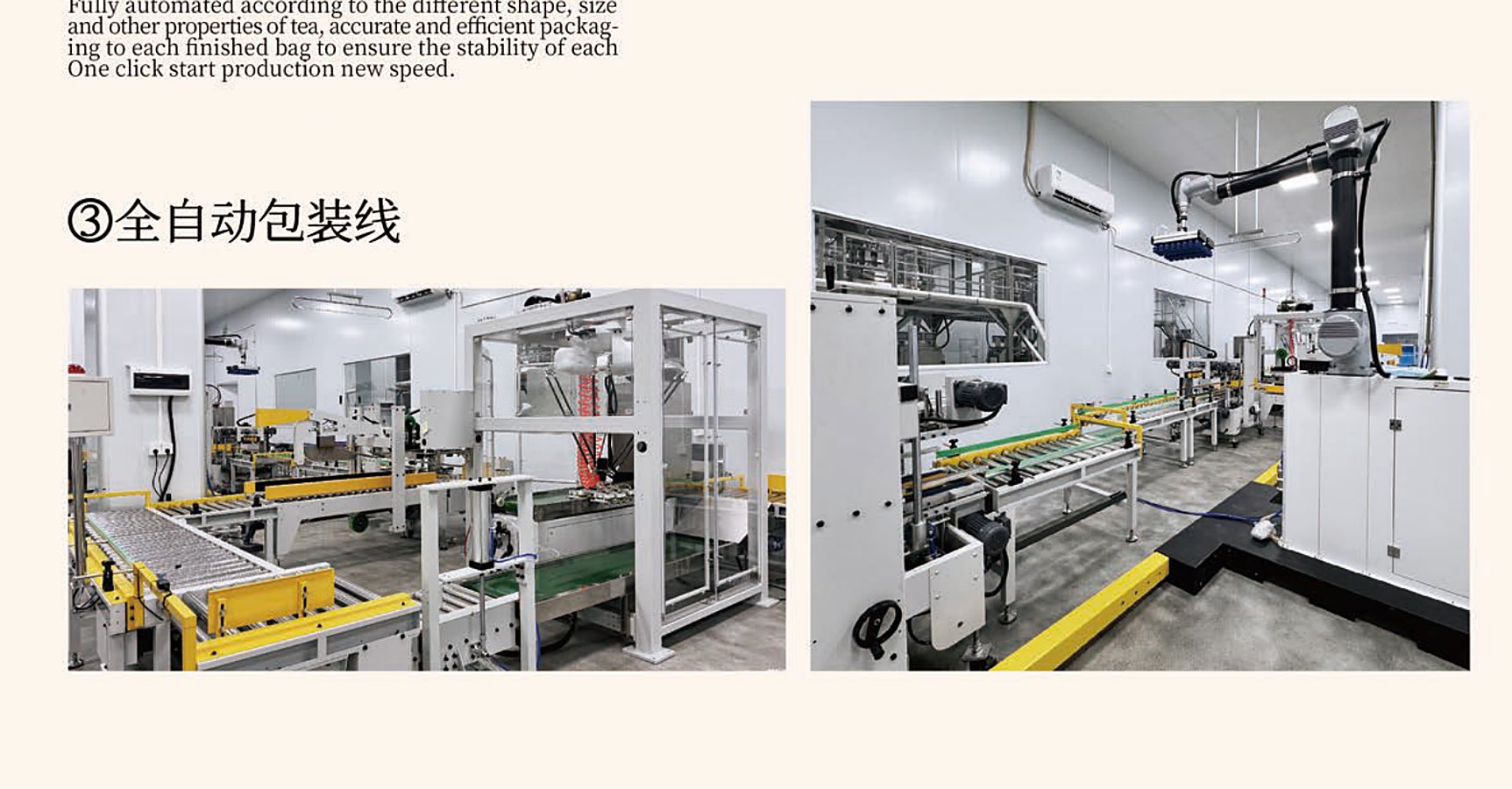
Production runs on a dual-factory setup: the Chaozhou plant, adjacent to Phoenix Mountain, at 24 tons per day and 8,000 tons per year with fully automated lines, and the Guangzhou plant, focused on imported black teas, adding 3,000 tons per year. The ISO 22000 platform governs the run, and professional packaging design support is available if your program needs artwork developed rather than just printed.
Step 6: Export Documents and Shipment
At shipment, the export file goes with the goods, backed by the factory's export food producer registration. Schedules are confirmed per project once the specification and documents are locked, so the delivery date you receive at this stage is one the factory has committed to.
Where Your Sign-Off Matters
You have three decision points: the specification, the sample approval and the document set. Everything between them is factory work. Behind the scenes, the two factories and the operations centers in Guangzhou, Shanghai and Jinan work from the same project file, so the answer to a status question comes from the team running the order. That structure is deliberate - it keeps your team's effort at the steps where brand and compliance risk actually sit.
Start Your OEM Order
Send your market, format and volume plan through the contact form on our website or on WhatsApp at +86 130 7163 2772. Our export team replies to every inquiry with the specification template, base tea options and the document list for your import file.
Sources and Verification
Process steps, OEM scope and service claims reflect our OEM program documentation as a company source. Factory capacities - Chaozhou 24 tons per day and 8,000 tons per year; Guangzhou 3,000 tons per year - are stated in company materials.
Certificates cited: ISO 22000:2018 no. 001FSMS2400758 (CQC, valid to 10 October 2027; scope: production of flavored tea, packaging of tea and herbal tea products); halal certification to GSO 2055-1:2015 (SHC); US FDA facility registration no. 10319209992 (DUNS 450984434, valid through 31 December 2026; facility registration, not product approval); China export food producer registration. Production and shipment schedules are confirmed per project; no fixed lead times are promised in this article.