What Does the Stopwatch Miss When Tea Comes from a Dispenser?
An orange jasmine tea service card begins with sliced fruit and a measured tea base. Timing the pour leaves out the work of preparing the batch.
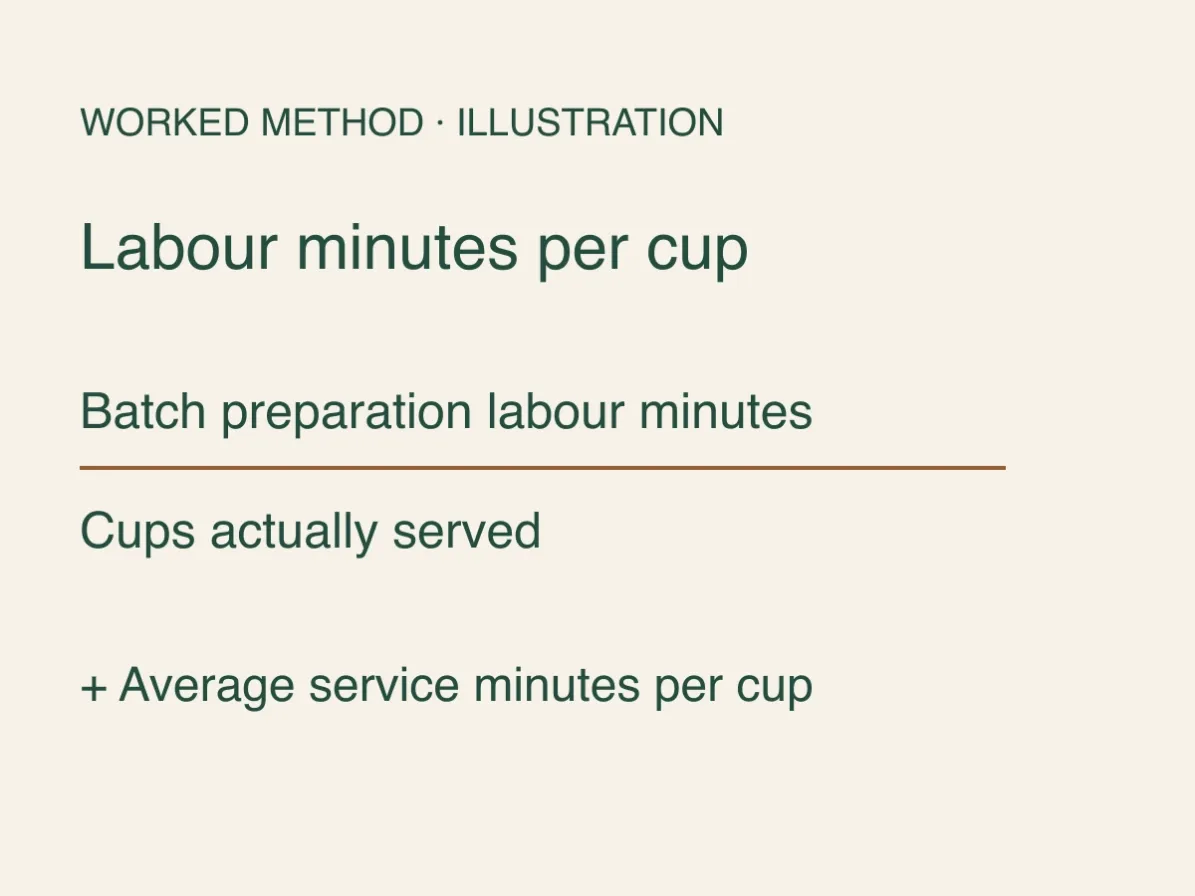
Start a stopwatch when the tap opens and stop it when the cup is full. You have timed a pour. For our iced jasmine tea with orange slices, someone has already cut the fruit, shaved the cucumber into ribbons and set aside the rosemary before the first cup reaches the tap.
For this demonstration, the card calls for 250 mL of jasmine Maojian extract, 3 L of water and 100 g of sugar in the mixing bucket. The mixture then goes into a dispenser with ice and the prepared garnish.
Time the batch preparation once, including the garnish. Count the cups you actually serve from that batch. If two people each spend five minutes preparing it, record ten labour minutes.
Labour minutes per cup = total batch preparation labour minutes ÷ cups actually served + average service labour minutes per cup.
Multiply the result by your labour cost per minute to estimate the labour cost per served cup. A quiet event and a busy one can have the same pour time. If fewer cups leave the dispenser, each served cup carries a larger share of the preparation. Our leaf tea and extract comparison follows the same distinction between advance preparation and work done after an order arrives.
Planning a dispenser service? Tell our export team what drink you want to serve and the size of your setup. We can discuss a tea base and application card for your counter.
Email bruce@yuanjingroup.com · WhatsApp / WeChat: +86 130 7163 2772
More from the journal
For drinks made individually, see how two jasmine recipes specify the amount of extract for each order. Tea Extract for Foodservice: Why One Jasmine Recipe Uses Grams and Another Uses Millilitres